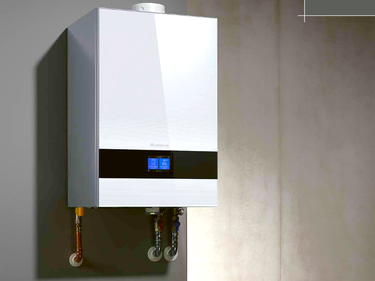
In December 2025, the European Commission presented a revised proposal for an Ecodesign Regulation, which repeals the de facto ban on the sale of stand-alone gas boilers from September 2029 under the previous version of the 2023 regulation.
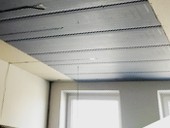
Based on the investigation of the impact of low-temperature large-area radiant systems during the heating season on the thermal comfort of office spaces, it can be concluded that they are capable of providing the required thermal performance during the heating season, as declared by the manufacturer.
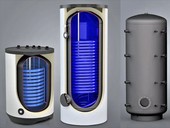
A comparison of the calculation of the volume of the storage tank to boilers with manual application of wood in a family house according to the criteria of subsidy programs and the ČSN EN 303-5 standard shows a relative agreement, respectively the acceptability of the use of both methods. The standard provides a minimum value. In practice, the resulting volume usually consists of two tanks.
This article presents a simulation analysis conducted at the Institute of Environmental Engineering at CTU, as part of the international exercise IEA EBC Annex 82. The aim of the joint exercise, which involved more than ten international research teams from different sectors, was to test and compare different approaches towards achieving energy flexibility in buildings on the basis of a unified exercise assignment. The Czech team based its study on a comprehensive simulation of the energy behaviour of buildings, including a detailed numerical model of the heating, hot water preparation, cooling and ventilation systems. The model was used to study the building potential for providing energy flexibility and future responsibilities of building operators in the context of smart energy grids.
The article discusses the history of sanitation installation, i.e. water installation, drainage systems inside buildings and gas installation pipework for buildings from the earliest times to 1948 and is primarily focused on the history of this field in the territory of the former Czechoslovakia. It also deals with the history of the plumbing trade, contemporary legal regulations, technical standards and professional literature on the territory of the former Czechoslovakia.
The contribution summarizes the fundamental chapters of the transported standard to re-demolition audit and building dismantling as a standard procedure for structure removal. The purpose of the standard will be to prescribe how the pre-demolition audit should proceed, what information it should contain, and how the deconstruction of the building should take place, in order to achieve the maximum possible utilization of the obtained materials. The motivation is primarily the return of quality raw materials to production and the reduction of primary resource extraction, which is one of the goals of sustainable development.
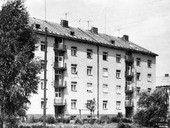
The preserved detailed data on the consumption of fuel (coke) for heating and hot water preparation in functionalist apartment building from the 1930s led to the idea to compare the energy consumption of these buildings at the time of their construction with the present day and to observe how the modernization interventions in both the heating system and the actual construction of the building are manifested and to quantify these modernization interventions.
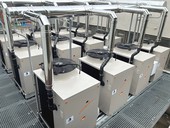
The authors deal with the use of waste heat from the data center for heating and hot water preparation. They design solutions according to the needs of the object with a combination of apartments/offices and evaluate the potential savings, financial, energy and ecological benefits, which have an impact on the ESG assessment.