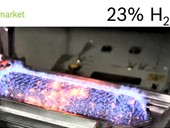
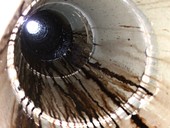
The burning of wood and wood sawdust, which are contaminated with adhesives and various means of surface protection, in domestic boiler rooms is harmful to the environment and also endangers the health of the heat source operator.
Internal sewers can be a source of odors in a building. The penetration of odorous gases into the interior is prevented by suitably designed ventilation of sewers and installation of odor traps (slang called siphons). The article summarizes the causes of odor penetration and the principles of sewer ventilation design.
Water is characterized by high specific heat, good thermal and thermal conductivity, low dynamic and kinematic viscosity, and is therefore a popular medium for heat transfer. However, there are several types of water, and not all of them are suitable. Some properties of water can cause malfunctions.
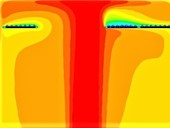
Room height and the risk of condensation affect radiant cooling performance. Correction factors are determined for freely suspended radiant panels depending on the height and temperature gradient of the air. At a height of 14 m and a gradient of 0.5 K / m, the total cooling capacity is up to 40% higher than the table.
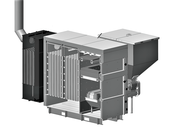
In order to maintain the functionality and safety of the operation of the flue gas path intended for the discharge of flue gases from solid fuel appliances, the chimney standard ČSN 73 4201 stipulates the minimum permitted cross-section of the chimney flue and the minimum speed of flue gases in it. How do modern pellet boilers cope with this condition?
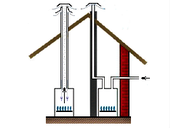
The cause of the odor after the generational replacement of the gas boiler can be reduced air exchange in the room, improperly designed waste pipes, or even insufficient hygiene. The level of cleaning and hygiene is solved by the apartment user. Sufficient ventilation and treatment of the waste pipe, such as the installation of an aeration valve, should be designed by a person skilled in the art.
Today, technical support is an essential part of services related to the sale of products, heating technologies, including other parts of the HVAC area. It has a pre-sale, sales and post-sale form. For those who need to use support, they are intended in the article of the said advice. At the same time, however, companies that introduce support can learn or inspire changes that have already been implemented.
By optimally distributing the active areas of the ceiling cooling, its performance can be increased. Performance changes in several variants were verified, for example when dividing the integral cooling surface into several smaller ones, when exposing the ceiling flap or a structure in the form of lamellas suspended under the ceiling. Performance differences are significant, in the tens of percent, which designers should take into account by optimizing the design.
In connection with the entry into force of Decree No. 264/2020 Coll., On the energy performance of buildings, the method of assessing the energy performance of new buildings is changing. The article on the case study of a family house presents an approach to the concept of technical systems of new family houses from the point of view of current and future requirements (from 1. 1. 2022) for the energy performance of buildings.
The author points out the potential for savings in heating, etc. in public buildings and the potential dangers arising from inappropriately chosen scenarios. The risk factor is in particular the “lock-in effect”, which causes the failure to use all the possibilities to reduce the energy consumption that exists.
The subject of the research is a ventilation unit with a heat pump providing vacuum ventilation in a specific family house. The year-round energy balance of the operation was prepared from the obtained parameters. For a total heat loss of 5 kW, the seasonal heating factor SPF of the entire system was evaluated at the level of 2.5.
The article shows part of the evaluation of the energy performance of a large building according to CSN EN 15316-2: 2018 and especially how the advantage of different methods of heating changes with the height of the building. It also includes a more detailed specification of some of the descriptions in the standard of ambiguous inputs.
The disadvantage of the family one-storey bungalow is the larger built-up area and the cooled envelope and thus higher specific heat consumption for heating compared to a compact two-storey house. The author offers a comparison of variants of bungalow heating by Total cost of ownership (TCO) method in Slovak conditions.
Achieving the criteria set for effectively district heating will be a precondition for the development of central heat supply in the coming period. Heating companies are therefore looking for suitable alternative solutions. In this paper it is the view of the designer on a concrete example of the combination of the use of geothermal water and CHP.