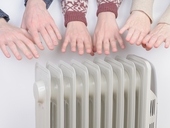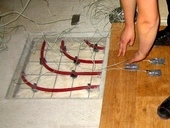
This article describes the measuring of six different floorings´ surface temperature with floor heating system, calculation of local heat flux in according to ČSN EN 1264 standard and comparison of the obtained values.
New rules for cost of heat energy allocation for central heating in houses applying evaluative indicators for these purposes. The Minister for Regional Development approved a draft amendment to Decree No. 372/2001. This amendment allows to increase the share folder of running radiators up to 70 % of total heat energy cost. The distribution of this component to final consumers suffers from a significant systemic problem, and these measures will further worsen the credibility of allocation results.
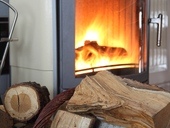
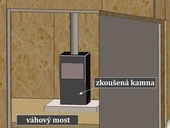
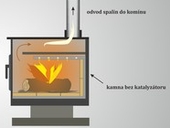
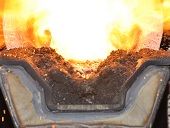
The object of article is to provide basic information about approaches to testing of stoves burning solid fuels in Europe and some other countries. Generally, stoves in Europe are tested according standard EN 13240. However, there’re other standards on national basis, for example Norwegian standards NS3058 and NS3059. If we look away from European border we can found standards which describe methods of stove testing – Australian/New Zealand standards and EPA standards in U.S.A. The article provides information about measuring sets, characterization of used fuels, testing categories for burning periods, measured parameters, emission limits and others things which are in these standards.
Biomass Action Plan envisages the available space in 3 variants with respect to the degree of self-sufficiency in food C.R. Area of fast-growing tree species growing steadily, in terms of total energy production is negligible involvement. By registering, according to the law of ash can be removed from the category of waste, and consequently can be applied as fertilizer.
The object of article is to provide basic information about approaches to testing of stoves burning solid fuels in Europe and some other countries. Generally, stoves in Europe are tested according standard EN 13240. However, there’re other standards on national basis, for example Norwegian standards NS3058 and NS3059. If we look away from European border we can found standards which describe methods of stove testing – Australian/New Zealand standards and EPA standards in U.S.A. The article provides information about measuring sets, characterization of used fuels, testing categories for burning periods, measured parameters, emission limits and others things which are in these standards.
Plans of the coalition in energy sector:
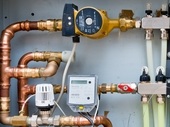
Heat meters are working set gauges and installation can only be performed by a registered company in the Czech Metrological Institute. Yet they are very often used and installed improperly or incorrectly. The following text should be specific instructions on what to avoid during installation of heat meters.
The heating period 2012/2013 in Prague based on the observation of Prague-Karlov Station was 234 days, a little longer, and with an average temperature of 5.0 °C, slightly warmer than the long-term average. The basic characteristic of heat demand for heating is 3266 D°(19) degree days, hence, the heat demand is slightly higher than long-term average 3224 D°(19). In the last decade, it is the highest number of degree days for a heating period and the second highest number of degree days than long-term average.
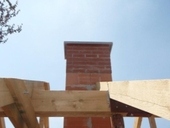
Opinions of the professionals concerned on the issue of fire safety in the operation of chimneys, flues and fuel appliances that address the Government Regulation No. 91/2010, are very different. Since this is a very serious issue, TZB-info wants to provide space for professional discussion, which result should be the unification of opinions.
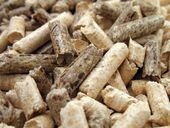
The market for wood pellets has grown, which is understandable due to the following market growth with boilers and biomass stoves. On the contrary, the market for agro pellets gradually declining. Pellets from agricultural production are completely different type of fuel than wood pellets. These industrial fuel which is in most cases not suitable for domestic heating.
The article is a commentary on Czech TV report about the feasibility of reducing CO2 in the atmosphere. To eliminate carbon dioxide from the atmosphere has been proposed a number of methods, many of which are currently at the stage of mere concept. Namely, this includes the artificial trees mentioned in the report. Even if such methods work, there still remains the question of what to do with the captured CO2. Storage in geological formations is uncertain and material recovery faces high energy demands. In some cases there is a misunderstanding resulting from the confusion of CO2 and other emissions. Namely on the facade, which allegedly eliminate CO2 from the air, but in fact it eliminates nitrogen oxides. The only reliable way to reduce CO2 emissions permanently is to reduce energy consumption.
Operational guidelines contain instructions for the behavior of workers in a variety of operational and emergency situations, clarify reporting lines and defines the personal responsibility of individual employees. Operating rules contain instructions for the operating individual units and maintenance instructions.
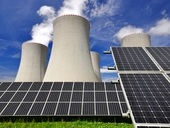
Solar radiation can be utilised in two basic ways. You can either gain heat from solar thermal collectors or electricity in photovoltaic panels. So far, heating of water by photovoltaics was too expensive to compete with conventional solar thermal collectors.
Weight , durability , and currently even the price of solar thermal collectors is comparable with commercially available photovoltaic modules.
Annual energy yield per unit area is approximately twice in the solar thermal collectors compared to the highest quality photovoltaic modules with cells made of monocrystalline silicon, due to the higher efficiency.
In the summer the photovoltaic modules are better when the working fluid is heated to temperatures above 100 °C. In the winter the breaking point is about 40 °C. The advantage of photovoltaics is the absence of heat transfer fluid and easier transfer of energy produced to the point of use. Electricity can also be used more versatile than heat.
If the investment cost of a complete solution of heating water by electricity from photovoltaic panels, either directly or using a heat pump, is lower than the investment cost of the solar thermal system, the PV water heating can be considered as effective utilization of electricity from photovoltaic plants. Such a solution could then be included as an alternative to any grant support for solar water heating.